Tokenomics and Vesting for Solana Tokens: A Practical Guide
How to plan tokenomics that survive launch: supply, allocations, liquidity, cliffs and linear vesting, and why on-chain vesting builds trust.
By Blue Brick team · Published 24 September 2026 · Updated 25 September 2026 · 3 min read
Plenty of tokens launch well and collapse a few weeks later, not because the idea was bad, but because the supply wasn't planned. Large holders sell, unlocks nobody expected hit the market, and trust disappears. Good tokenomics and vesting prevent most of that.
This guide covers the essentials for Solana tokens. (If you're launching a pure memecoin on pump.fun, the supply is fixed for you; see how to launch on pump.fun instead.)
Start with supply
Decide the total supply and whether it will ever change. Most projects mint the full supply at launch and then revoke the mint authority, so holders know no more can ever be created.
If your project needs new tokens over time, for example as staking rewards, plan exactly how many and when, and have a program release them rather than a person.
Plan the allocations
Split the supply into clear buckets, and publish them. A typical project might include:
- Liquidity: tokens paired with SOL or USDC in a DEX pool so people can trade.
- Community: airdrops, rewards and incentives.
- Team: for the people building the project.
- Investors: if you raised money.
- Treasury: for future development, partnerships and listings.
There's no universal "right" split, but buyers are wary when the team and insiders hold a large share with nothing locked.
Vesting: cliffs and linear unlocks
Vesting means tokens are released gradually instead of all at once. The most common pattern is a cliff followed by linear vesting:
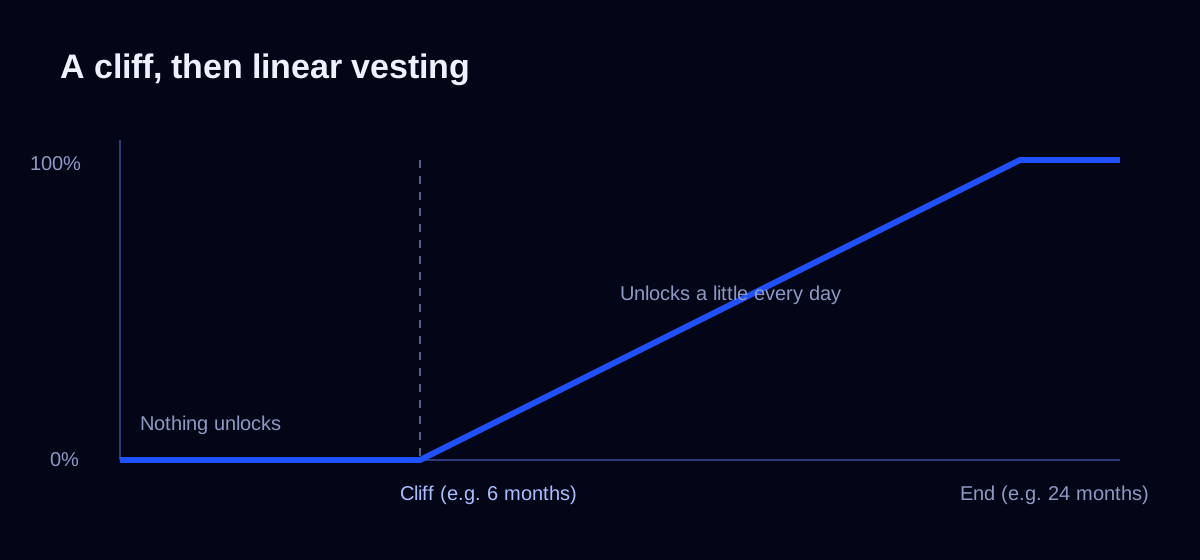
- During the cliff (for example, the first six months), nothing unlocks.
- After the cliff, tokens unlock a little every day until the end (for example, two years).
This keeps the team and investors committed and stops large amounts hitting the market at once. Community allocations are often released over time too, through rewards rather than one big drop.
Put vesting on-chain
A promise in a document is easy to break. On-chain vesting holds the tokens in a program that only releases them on schedule, so anyone can check exactly what's locked and when it unlocks. On Solana this is done with vesting programs or streaming protocols, or a custom program when you need specific rules.
Liquidity matters as much as supply
A token needs enough liquidity for people to buy and sell without the price swinging wildly. Decide how much of the supply and how much SOL or USDC go into the pool, and whether the LP tokens will be locked or burned, which proves the liquidity can't be pulled. Buyers check this, just like they check authorities.
Publish everything
Put your tokenomics on your website and in your docs: total supply, allocations, vesting schedules and the addresses where locked tokens live. A clear landing page that shows this builds trust fast.
Common mistakes
- No vesting for the team. It's the first thing serious buyers look for.
- Unlocks nobody knew about. Surprise unlocks destroy trust overnight.
- Too little liquidity. Thin pools make the price easy to manipulate.
- Keeping the mint authority "just in case". Without a clear, public reason, it looks like a risk.
Get it planned properly
Our token launch service covers tokenomics, liquidity and on-chain vesting, along with the token itself and its authorities. Deciding which token program to use comes first; start with SPL Token vs Token-2022.
Keep reading
Token launches
How to Launch a Token on pump.fun in 2026: A Step-by-Step Guide
A practical guide to launching a token on pump.fun: how the bonding curve and graduation to PumpSwap work, what to prepare, launch day, and what happens next.
25 Sept 2026 · 4 min read
Token launches
SPL Token vs Token-2022: Which Should Your Solana Token Use?
SPL Token or Token-2022? What each Solana token standard does, the extensions Token-2022 adds, compatibility trade-offs and how to choose.
25 Sept 2026 · 3 min read
Token launches
Mint and Freeze Authority on Solana: When to Revoke Them
Mint, freeze and update authority explained. What each Solana token authority can do, why buyers check them, and when revoking them builds trust.
25 Sept 2026 · 3 min read