How to Launch a Token on pump.fun in 2026: A Step-by-Step Guide
A practical guide to launching a token on pump.fun: how the bonding curve and graduation to PumpSwap work, what to prepare, launch day, and what happens next.
By Blue Brick team · Published 25 September 2026 · 4 min read
Launching a token on pump.fun takes about a minute. Launching one that people actually buy, hold and talk about takes preparation. This guide walks through how pump.fun works today, what to have ready before you press the button, and what to do in the hours after.
If you'd rather have a team handle the technical side, see our Solana token launch service.
How pump.fun works
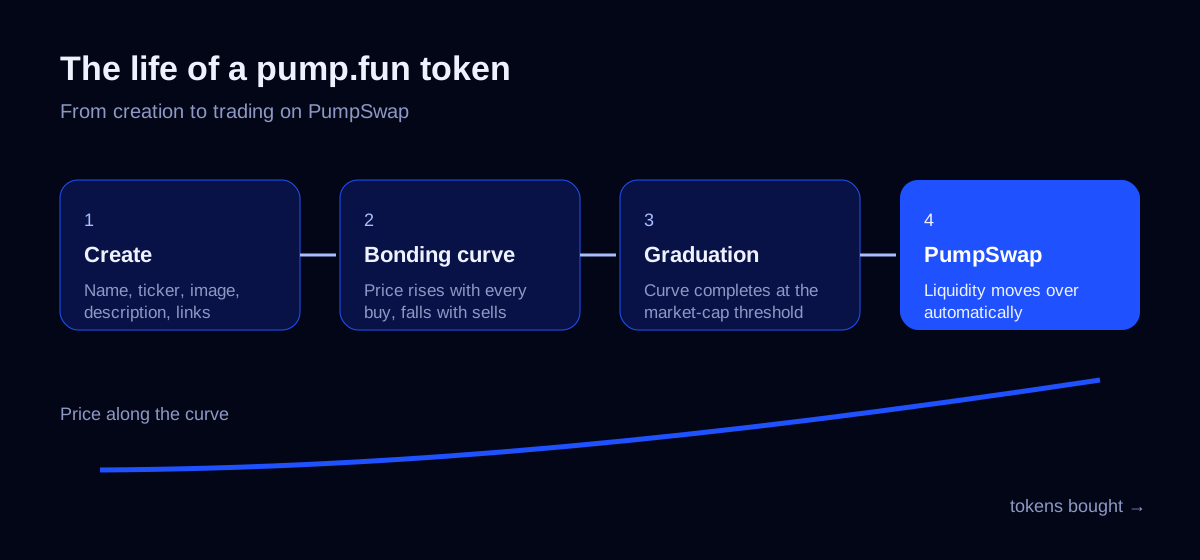
pump.fun is a launchpad on Solana where anyone can create a token without writing code or providing liquidity. You give it a name, ticker, image and a short description, and the token is live and tradable straight away.
The bonding curve
Every new token starts trading on a bonding curve: a formula that sets the price automatically. Each buy pushes the price up the curve; each sell brings it back down. There's no order book and no liquidity for you to seed, which is what makes launching so easy.
pump.fun charges a small fee on every trade on the curve, split between the protocol and the token's creator. Fees change from time to time, so check pump.fun's fee page for the current numbers.
Graduation to PumpSwap
When a token's market cap on the curve reaches the graduation threshold, the curve closes and all of its liquidity moves automatically to PumpSwap, pump.fun's own exchange. From then on the token trades there like any other token, and aggregators such as Jupiter can route to it. Before March 2025, graduating tokens moved to Raydium instead.
Most tokens never get there. On-chain data from 2026 shows only around 3% of new pump.fun tokens graduate, and those that do usually do it quickly. That's the real challenge of a launch: attention in the first hours.
Before you launch: what to prepare
The tokens that graduate rarely do it by luck. They arrive with a story, a community and everything a buyer checks already in place.
- A clear idea. One sentence that explains why this token exists and why someone should care.
- Name and ticker. Short, memorable and not already taken by a well-known token.
- Artwork. A square image that reads well at small sizes, because that's how it appears in wallets and on DEX screeners.
- A landing page. Buyers look for a site with the contract address, a chart and your socials. A good token landing page is often the difference between a curious visitor and a buyer. Our memecoin landing page checklist covers what to include.
- Socials. An X account and a Telegram or Discord group, set up and active before launch, not after.
- A launch plan. Who you'll tell, when, and what you'll post in the first hour.
Launching, step by step
- Connect a wallet to pump.fun with enough SOL for the small creation fee and any first buy you plan to make.
- Create the coin. Enter the name, ticker, description and image, and add links to your site and socials. Double-check everything: the details are hard or impossible to change afterwards.
- Decide on a first buy. Creators can buy at the start of the curve. Buying a small amount is common; buying a huge share at once looks like a setup for selling, and many traders will avoid the token.
- Launch and share. Post the contract address everywhere you planned to, pin it, and put it on your landing page.
- Stay present. Answer questions, share updates and keep the community active. Silence in the first hours kills momentum.
After launch
If your token graduates, it trades on PumpSwap and becomes much easier to find. That's when longer-term work begins: listing on data sites, keeping the community growing and, for serious projects, building real utility.
If it doesn't graduate, it stays on the bonding curve and can still be traded there. There's no way to restart a curve, so if you want a second attempt, it's a new token.
Common mistakes
- Launching before anything is ready. A token without a site or socials looks abandoned from the first minute.
- Buying too much at the start. Large creator wallets scare buyers away.
- Copying a trending name. It's crowded, and it can look like an attempt to mislead.
- Promising what you can't deliver. Be honest about what the token is. Many are just for fun, and that's fine if you say so.
pump.fun or your own launch?
pump.fun is fast and cheap, and the bonding curve solves the problem of starting liquidity. But you can't set your own supply, starting price or tokenomics. If your project needs vesting for a team, a specific supply, or a token with extra features, a direct launch with your own liquidity pool may suit you better. We compare the options in SPL Token vs Token-2022 and explain the trust side in mint and freeze authority explained.
The short version
Prepare the story, the site and the community first, launch with a modest first buy, and stay active in the first hours. That's what separates the few percent of tokens that graduate from the rest.
Keep reading
Token launches
SPL Token vs Token-2022: Which Should Your Solana Token Use?
SPL Token or Token-2022? What each Solana token standard does, the extensions Token-2022 adds, compatibility trade-offs and how to choose.
25 Sept 2026 · 3 min read
Token launches
Mint and Freeze Authority on Solana: When to Revoke Them
Mint, freeze and update authority explained. What each Solana token authority can do, why buyers check them, and when revoking them builds trust.
25 Sept 2026 · 3 min read
Token launches
Tokenomics and Vesting for Solana Tokens: A Practical Guide
How to plan tokenomics that survive launch: supply, allocations, liquidity, cliffs and linear vesting, and why on-chain vesting builds trust.
24 Sept 2026 · 3 min read