Mint and Freeze Authority on Solana: When to Revoke Them
Mint, freeze and update authority explained. What each Solana token authority can do, why buyers check them, and when revoking them builds trust.
By Blue Brick team · Published 25 September 2026 · 3 min read
Before buying a new Solana token, experienced traders check three things on-chain: who can create more of it, who can freeze it, and who can change it. Those powers are called authorities, and how you set them says a lot about whether your token can be trusted.
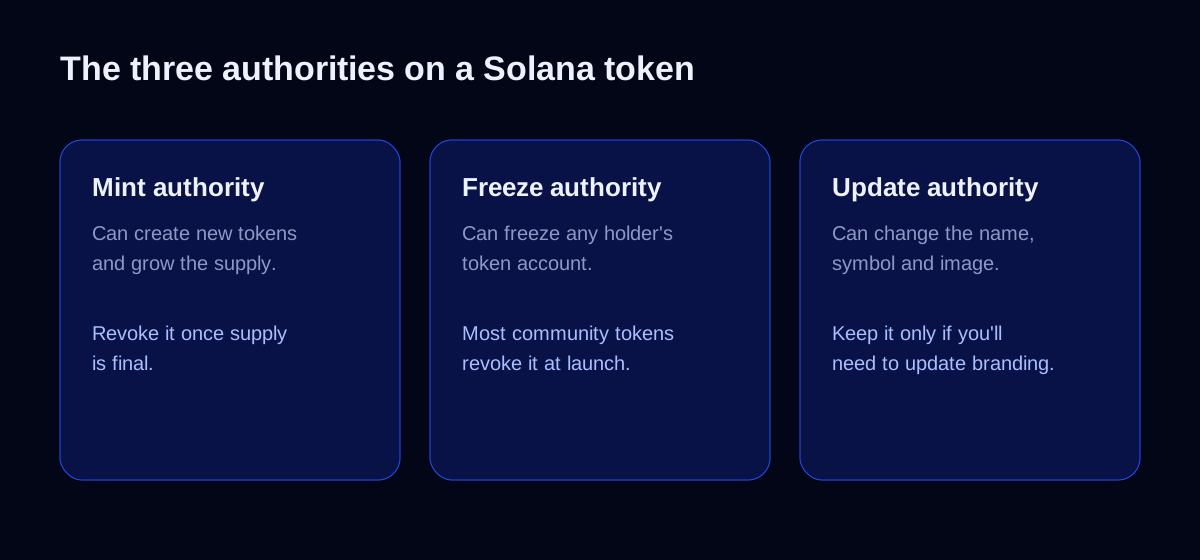
The three authorities
Mint authority
The mint authority can create new tokens, increasing the supply. While it exists, holders can't be sure the supply won't suddenly grow and dilute them.
For most tokens, the right move is to mint the full supply at launch and then revoke the mint authority, which permanently sets it to nobody. After that, no one, including you, can ever create more.
Freeze authority
The freeze authority can freeze any holder's token account, stopping them from selling or moving their tokens. That's a useful tool for regulated assets and stablecoins, but for a community token it's a red flag: it means the creator could lock buyers in.
Most memecoins and community tokens revoke the freeze authority at launch. Tools that scan tokens flag an active freeze authority as a risk.
Update authority (metadata)
The update authority can change the token's name, symbol and image. Keeping it lets you fix a typo or refresh your logo, but it also means someone could rebrand the token to impersonate another project.
A common middle ground is to keep it for a while after launch, then revoke it, or move it to a multisig so no single person controls it.
How to check any token's authorities
Paste the token's address into a Solana explorer such as Solscan or Solana Explorer and look at the token details. You'll see the mint and freeze authority, or that they're disabled. Token scanners summarise the same information.
Do this for your own token after launch, too. It's exactly what buyers will do.
When to keep an authority
Revoking isn't always right. Keep an authority when you have a real, explainable reason:
- A planned supply schedule, such as emissions for staking rewards, may need the mint authority, ideally held by a program rather than a person.
- Compliance needs for regulated tokens may require freezing.
- Early branding changes may justify keeping the update authority for a short time.
If you keep one, say so publicly, explain why, and consider putting it behind a multisig such as Squads, so several people must approve any use.
Revoking is permanent
Once an authority is revoked, it's gone forever. There's no way to mint more tokens or unfreeze accounts later. Make sure the full supply is minted and distributed exactly as planned first, including anything that should go to vesting contracts.
Token-2022 has more authorities
Tokens created with Token-2022 can have extra authorities for their extensions, such as the authority that controls transfer fees or a permanent delegate that can move anyone's tokens. Each one deserves the same thinking: keep it only with a reason, and be open about it.
The short version
Mint the full supply, revoke the mint and freeze authorities unless you have a clear reason not to, and decide deliberately about metadata. It's one of the cheapest ways to show buyers you're serious. Our token launch service sets and documents every authority as part of the launch.
Keep reading
Token launches
How to Launch a Token on pump.fun in 2026: A Step-by-Step Guide
A practical guide to launching a token on pump.fun: how the bonding curve and graduation to PumpSwap work, what to prepare, launch day, and what happens next.
25 Sept 2026 · 4 min read
Token launches
SPL Token vs Token-2022: Which Should Your Solana Token Use?
SPL Token or Token-2022? What each Solana token standard does, the extensions Token-2022 adds, compatibility trade-offs and how to choose.
25 Sept 2026 · 3 min read
Token launches
Tokenomics and Vesting for Solana Tokens: A Practical Guide
How to plan tokenomics that survive launch: supply, allocations, liquidity, cliffs and linear vesting, and why on-chain vesting builds trust.
24 Sept 2026 · 3 min read