Metaplex Core vs Token Metadata vs cNFTs: Solana NFT Standards
Which Solana NFT standard should your collection use? Metaplex Core, Token Metadata and compressed NFTs (Bubblegum) compared on cost, features and use cases.
By Blue Brick team · Published 24 September 2026 · Updated 25 September 2026 · 3 min read
Launching an NFT collection on Solana starts with a choice most creators don't know they're making: which NFT standard to use. It decides how much minting costs, what features your NFTs can have, and which tools support them. Almost all Solana NFTs use a Metaplex standard, and today there are three to choose from.
Metaplex Core
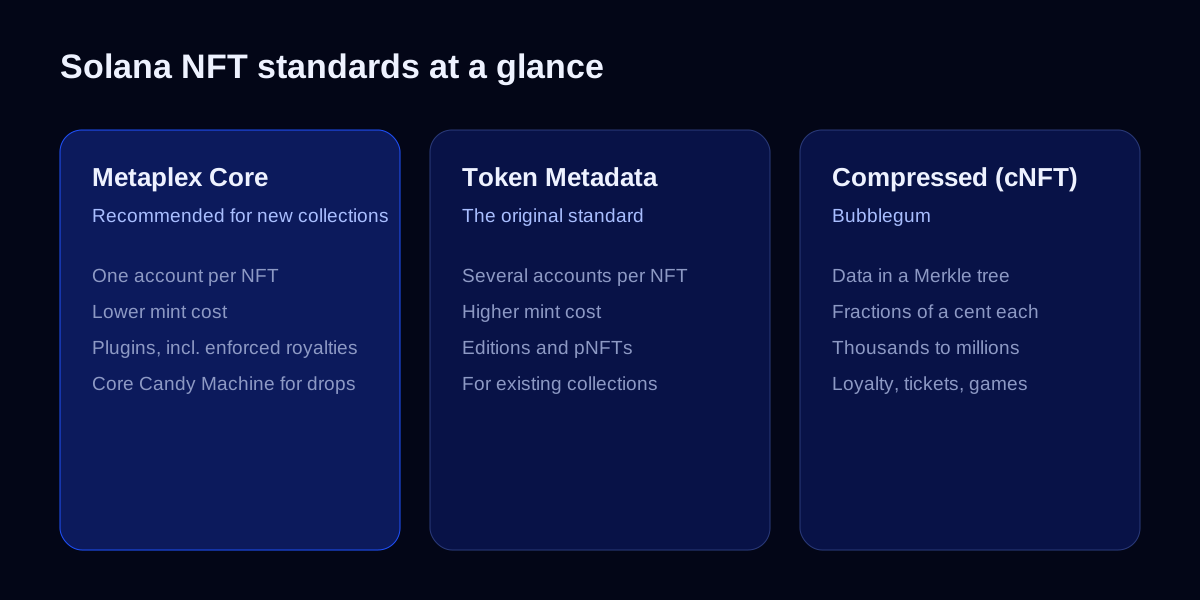
Core is Metaplex's newest NFT standard, and the default choice for new collections. Each NFT is a single account, which makes it much cheaper to mint than the older standard and lighter on the network.
Core also has a plugin system: optional features you attach to NFTs or whole collections, such as:
- Royalties that marketplaces must respect.
- Freeze and transfer rules, useful for staking or soulbound items.
- Attributes stored on-chain, which programs can read and update (handy for games).
For drops, Core has its own Core Candy Machine, with guards for allowlists, mint limits, start times and prices.
Token Metadata
Token Metadata is the original standard that most older Solana collections use. Each NFT is a token plus several accounts for its metadata, so minting costs noticeably more than Core.
It's still the right choice when you need something only it supports, such as editions (numbered prints of one master) or compatibility with an existing collection. It's also the standard that stores metadata for fungible tokens.
Compressed NFTs (Bubblegum)
Compressed NFTs (cNFTs), made with Metaplex's Bubblegum program, don't use a separate account for each NFT. Instead, their data is stored in a Merkle tree, with only a small fingerprint on-chain. That makes minting extraordinarily cheap: at the time of writing, around a hundredth of a cent's worth of SOL per NFT, so minting a million costs far less than minting a thousand regular NFTs.
The trade-off is that apps read cNFTs through indexers (the DAS API offered by RPC providers such as Helius) rather than directly from accounts. That's well supported today by wallets and marketplaces.
cNFTs are ideal for:
- Loyalty programs, badges and rewards sent to many users.
- Event tickets and POAPs.
- Game items in large numbers.
- Airdrops to a whole community.
Bubblegum v2 also works with Core collections, so you can combine the two.
How to choose
| If you're… | Use |
|---|---|
| Launching a new PFP or art collection | Metaplex Core |
| Minting thousands or millions of items | Compressed NFTs |
| Extending an existing Token Metadata collection | Token Metadata |
| Needing numbered editions of one artwork | Token Metadata |
| Building a game with on-chain item stats | Core (or cNFTs at large scale) |
Beyond the standard
The standard is only the start. A successful collection also needs a mint site that stays up when everyone mints at once, artwork and metadata that marketplaces display correctly, and utility that gives people a reason to hold, such as token-gated access, staking or perks.
Many collections launch alongside a fungible token; if that's your plan, read SPL Token vs Token-2022 too.
Build it with us
We build Solana NFT systems end to end, from generative artwork and Core or compressed mints to mint sites, staking and token-gating. See our NFT development service.
Keep reading
Token launches
How to Launch a Token on pump.fun in 2026: A Step-by-Step Guide
A practical guide to launching a token on pump.fun: how the bonding curve and graduation to PumpSwap work, what to prepare, launch day, and what happens next.
25 Sept 2026 · 4 min read
Landing pages
The Memecoin Landing Page Checklist: What Buyers Look For
What every memecoin landing page needs: contract address, live chart, how-to-buy steps, tokenomics, socials and speed. From the team that builds them.
25 Sept 2026 · 3 min read
Token launches
SPL Token vs Token-2022: Which Should Your Solana Token Use?
SPL Token or Token-2022? What each Solana token standard does, the extensions Token-2022 adds, compatibility trade-offs and how to choose.
25 Sept 2026 · 3 min read